
Comment
Exploring the planning reform road ahead at our recent Midlands roundtable
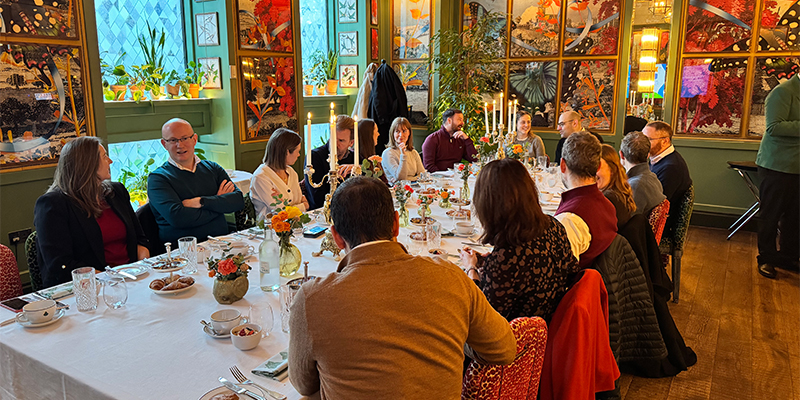
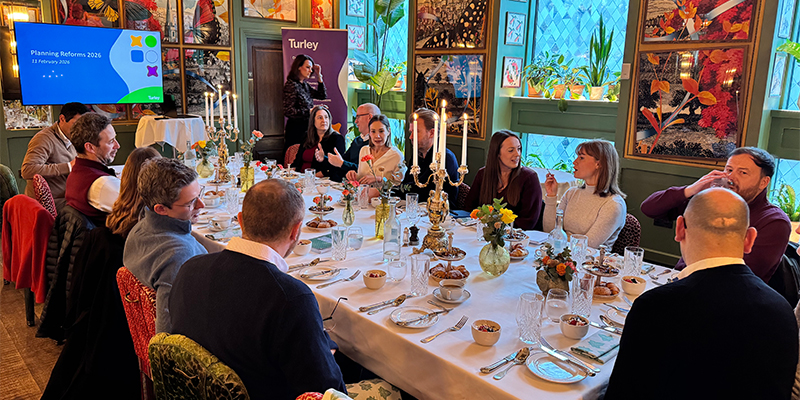
In February, our Midlands team hosted a breakfast event at the Ivy in Birmingham to explore the forthcoming planning reforms. We brought together our clients for a roundtable discussion on how the reforms are expected to influence decision-making in 2026. The session provided a valuable opportunity to reflect on the direction of travel and the practical implications for projects, investment, and communities across the Midlands.
With reform firmly on the Government’s political agenda, five key themes shaped our discussion:
- Forthcoming updates to the National Planning Policy Framework (NPPF)
- The role of planning in driving economic growth
- The future of the Green and Grey Belt
- The introduction of Spatial Development Strategies (SDSs)
- The implications of Local Government Reorganisation (LGRs)
We unpack some of the discussions on the key themes below.
Unlocking economic growth
One of the most prominent shifts discussed emerging from the Draft NPPF is the repositioning of the economy at the forefront of national planning policy. Growth is no longer implicit, it is explicit. The tone is more pro-investment than many around the table could recall in recent years.
We debated whether the renewed emphasis on “market signals” represents a meaningful change. There was consensus that if market signals are to carry real weight, the system must be agile enough to respond. That means allowing flexibility within permissions, particularly for employment and mixed-use schemes, so that developments can evolve as economic conditions change. A rigid consent in a volatile market can undermine delivery before a shovel hits the ground.
At the same time, there was clear recognition that economic growth, however substantial its policy weight, cannot eclipse environmental and social objectives. Sustainable growth must integrate climate resilience, biodiversity gain, infrastructure provision, and community benefit.
The discussion also turned to the prominence of “modern sectors”, such as advanced manufacturing, digital industries, and defence. These sectors bring specific operational requirements and often significant economic multipliers. The planning system will need to offer certainty and responsiveness if the UK is to remain competitive in attracting such investment.
Tools such as Local Development Orders (LDOs) were discussed as part of the solution. By providing upfront parameters and reducing risk, LDOs can signal confidence to investors and accelerate delivery, but only where local authorities are adequately resourced and willing to use them strategically.
The grey belt – a major policy moment
The introduction of the grey belt was widely described as a significant step change, and for many, represents one of the most notable evolutions in Green Belt policy.
At present, in particular where Local Plans are absent, out-of-date, or unable to demonstrate supply, national policy shifts carry significant weight in bringing forward grey belt development.
It was discussed that as new, up-to-date Local Plans are adopted, the scope for speculative grey belt proposals is likely to narrow. However, Local Plans will themselves be required to identify grey belt sites. For land promoters and developers, this reinforces the importance of continuing to promote suitable grey belt sites through the Local Plan process.
We also reflected on the increasing focus on spatial delivery, placing weight behind developments within and around settlements, and in particular around railway stations. Concentrating growth in well-connected locations makes intuitive economic sense and aligns with sustainability objectives.
This prompted a further discussion that higher density requirements around stations may support productivity and land efficiency, but there are practical challenges around how such developments would sit alongside design codes, heritage considerations and local character. There was concern that if density expectations are applied too mechanistically, conflict is inevitable. Context-led design must still matter.
The absence of definitive clarity of what constitutes “Very Special Circumstances” suggests that case law will remain central to defining the boundaries of acceptable development.
Strategic planning and reorganisation returns
The emergence of Spatial Development Strategies (SDS) was broadly welcomed as a return to planning at the regional scale.
Attendees’ experience was that resolving the unmet housing needs of other SDS areas does not appear to be a priority for SDSs. If so, this could mark a shift from previous expectations around redistribution of unmet need.
How this plays out in practice will be interesting. Where one strategic area is constrained and another has capacity, what mechanisms will ensure co-operation?
There was optimism about the potential for SDSs to provide coherence, but also caution that without clear governance, statutory weight, and alignment with infrastructure funding, they risk adding another layer of complexity.
Overlaying all of this is Local Government Reorganisation (LGR). We reflected on the reality of structural change and what opportunities and challenges this could present across the Midlands.
The SDS and LGR consultations are currently open and running until 26th March 2026; providing an opportunity for developers and investors to help shape the emerging frameworks.
A system in transition
There was no sense at the roundtable that 2026 reforms offer a simple, one-size-fits-all solution. Instead, we are entering a period where policy, politics and place are colliding in new ways.
What is clear is that planning in 2026 will look and feel different. The challenge and the opportunity is ensuring that planning reforms translate into delivery in a way that genuinely balances growth, the environment, and local communities.
Thank you to our participants for their valued contributions.
Participants:
Alex Housden (MEPC)| James Hill (GB Europe)| Jessica Evans (Indurent)| Lisa Turley (Muse)| Matthew Fox (IM Properties)| Rachel Mythen (Harworth Estates)| Richard Knight (IM Properties)| Richard Lomas (Richborough Estates)| Russell Crow (Gallaghers)| Tim Plagerson (Taylor Wimpey)| Turley Participants: Andrea Arnall | Camilla Duckworth | David Blackadder-Weinstein | Fiona Lee-McQueen | Rosie Cotterill | Sam Lake | Tom Armfield
For more information please contact Andrea Arnall, Fiona Lee-McQueen, or Camilla Duckworth.
23 February 2026
Key contacts